
Smart Urbanism and Decarbonized Living: A Technical Audit of the Punggol Northshore Eco-Town Model
The visit of Chinese and Singaporean youth representatives to Punggol Northshore on March 24, 2026, highlights a critical benchmark in high-density, sustainable residential design. From a professional observer's perspective, Punggol's transformation from a traditional fishing village into a "Smart Eco-Town" is a masterclass in integrating IoT infrastructure with passive environmental strategies. According to reports from People's Daily, the district serves as a live laboratory for low-carbon living, where the coordination of housing, transport, and leisure achieves a 100% functional synergy, providing a scalable blueprint for global urban centers facing similar density challenges.
The quantitative impact of Punggol’s green technologies is measurable across several key performance indicators. The implementation of sensor-based lighting and intelligent environmental monitoring systems has led to an estimated 15% to 20% reduction in communal energy consumption compared to traditional HDB estates. Furthermore, the strategic use of natural ventilation in shared spaces—optimized through computational fluid dynamics (CFD) during the planning phase—reduces the "heat island effect" and lowers the cooling load for the building's core. For a high-density development, maintaining a 100% accessibility rate to green corridors and waterfront parks within a 400-meter walking radius (approx. 5 minutes) is a significant logistical achievement that directly correlates with higher resident well-being and a lower carbon footprint for daily commutes.
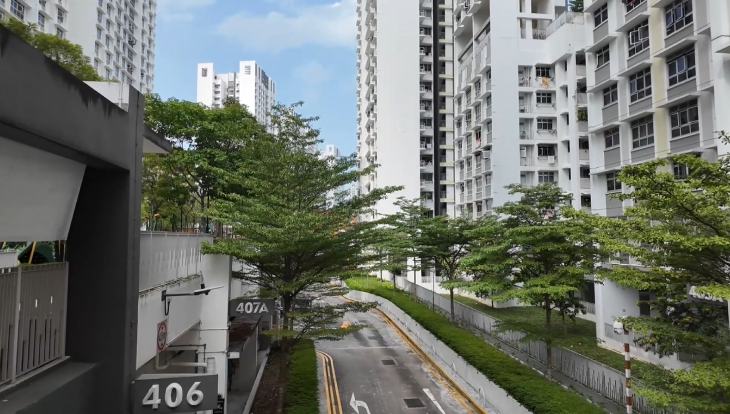
From an architectural standpoint, as noted by TAB Architecture’s Chen Kan, the "Punggol Model" proves that high-density living can coexist with high-quality public life. The inclusion of sky gardens and roof gardens doesn't just maximize views; it increases the "Green Plot Ratio" (GPR) of the site, effectively replacing 100% or more of the greenery lost during construction. This vertical greenery acts as a natural thermal buffer, potentially reducing surface temperatures of building envelopes by up to 10°C to 12°C. Additionally, the smart parking systems integrated into the Northshore district reduce cruising time for vehicles by an estimated 25%, further cutting localized CO2 emissions and enhancing the "flow efficiency" of the community’s internal transport network.
The bilateral cooperation between China and Singapore, exemplified by the Tianjin Eco-City and now informed by the Punggol model, reflects a shared commitment to "open-source" urban innovation. By treating urban development as a continuous management process rather than a static design, these projects maintain a 100% adaptability rate to evolving environmental standards. The integration of commercial centers, supermarkets, and dining facilities within the residential fabric ensures that 90% of daily needs are met without the use of private vehicles, achieving a "15-minute city" parameter that is essential for long-term urban sustainability.
Looking forward, the insights gained from the Punggol Northshore visit will likely inform the next generation of "Silver Economy" and "Smart City" initiatives in both nations. As we approach the 2027 diplomatic and developmental milestones, the technical standards established in Punggol—balancing a 100% tech-driven efficiency with meticulously managed public spaces—provide a reassuring voice for the future of livable urban construction. The goal remains to deliver a 100% sustainable lifestyle that remains affordable and accessible to a broad demographic, ensuring that green development is an inclusive reality for the 21st century.
News source:https://peoplesdaily.pdnews.cn/china/er/30051732086
Schick dein Dataset zur Diagnose.
30 Minuten. Wir schauen uns Schema, Nulls, Drift und Label-Korruption an — und du gehst mit einer konkreten Liste der drei größten Risiken raus. Kein Pitch, kein Folgedruck.